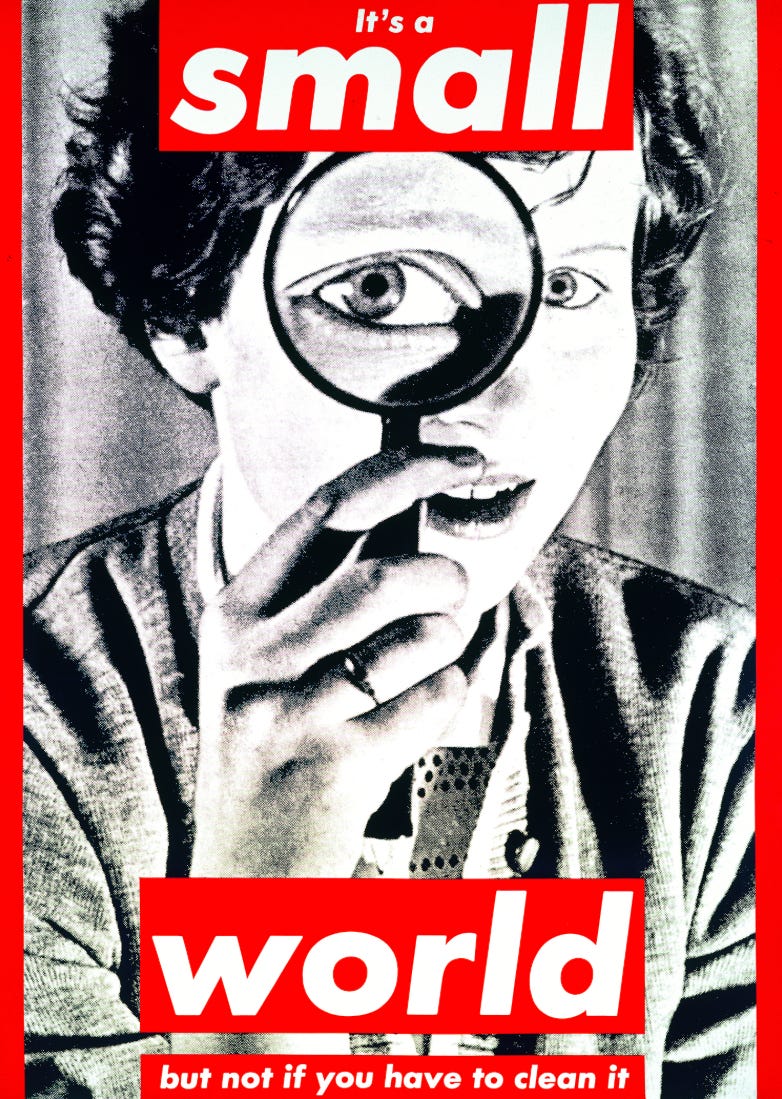

There is a lot of noise about the “IRL CONNECTION ECONOMY”, the “FUTURE OF COMMUNITY” - in a word, how to optimize the shit out of human connection via a sleek interface that’s scalable.
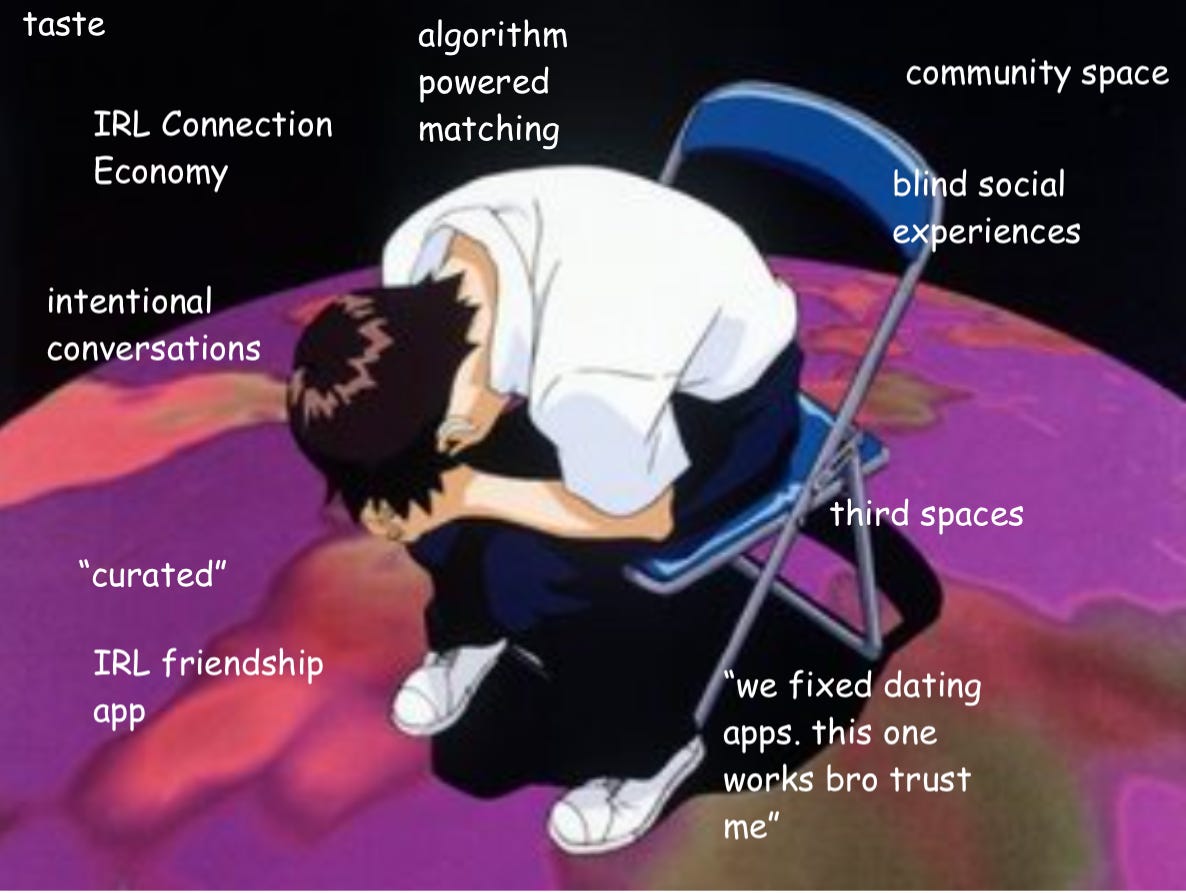
There’s a burgeoning trend that’s widely ignored, I suspect because it’s not directly monetizable and inherently shouldn’t be scaled beyond what makes sense for that specific tech. The future of the social internet and the monetary winner of consumer social don’t have to be the same thing, and the future of the social internet also can’t be “people go meet each other IRL”. People aren’t leaving the internet and will continue to socialize online…
The future of the social internet isn’t “irl connection economy” apps designed to reintroduce you to the concept of Dinner, and it isn’t bigger platforms or better, more personalized algorithms. It’s smaller, “personal software” built for defined micro-communities.
1.Not Community
The term “community” has become a hollowed out shell of itself. It’s succumbed to death by a thousand stupid posts - a thousand social media content marketing calendar notifications. Brands and large social media platforms have co-opted “community” to the point that it’s more a euphemism for “group of target consumers”. Brands will continue to double down on their “community” play in an effort to reach consumers amidst a branding + marketing landscape increasingly saturated by AI, in an effort to differentiate themselves from other (similar) brands. For these reasons, I want to avoid the term “online communities” entirely.
Personal Software is not “community” in this sense. A defining feature of Personal Software is that there is absolutely nothing being advertised - no algorithms, no covert product placement. Personal Software constitutes a return to the early internet: a sense of discovery of ideas, not things to buy, and of people, not “communities” rallied around a brand.
2.Solitude is lucrative for businesses and addictive for 2026 consumers
It is naive to think that we’ll all tire of screens and scrolling and fully return to interacting with each other in real life. We’re not going to return to the lifestyle of feasts and dances and rich, deep community that our ancestors enjoyed - as a country, our brain’s reward centers are too far gone into the dopamine-hit void.
In a guest post on Derek Thompson’s newsletter, Alex Mayyasi points out that capitalism rewards anti-social businesses: delivery apps, short-form video apps, fast-casual restaurants where you order at a kiosk, get a number, and leave because there aren’t enough cold hard stools to hunch over and eat your meal on. These are the businesses that generate returns for investors via either going public or getting acquired. He writes that “free, social activities compete with cheap, engaging, and high-quality entertainment…and even cheaper doomscrolling”: the profit motives of Netflix, Doordash, and Meta shape our choice to stay in and consume (in all senses of the word) rather than go outside.
Loneliness is efficient for both businesses and self-interested individuals, and I believe 2026 consumers enjoy being lonely (at home, comfortable, catered to by apps), realistically. However, actual loneliness is not sustainable - in that sense, I believe people will continue to interact with each other behind screens, but seek something beyond Instagram/Tiktok. Instead of returning offline, people will rebuild connection online in a different form.
3.Shift from Platforms to Places
Big social media platforms like Instagram, Facebook, and increasingly TikTok have become enshittified:
People are tired of everything being an ad and they are tired of the Algorithm. Research from Verge found that “sixty percent of respondents view the state of social media negatively, expressing it feels like a place of never-ending product placements and makes them feel like a number in a giant algorithmic machine.” While social media still clings onto its original purpose, to connect people, most believe it has fueled societal divisions by creating algorithm-driven echo chambers.
This leaves a dearth of places on the internet that support genuine, meaningful connection. Verge’s research indicated that “platforms that can facilitate this ‘connection shift’ will redefine the next phase of the digital community”; surveyed individuals’ desire for “smaller, more intimate communities” online serves as a harbinger that smaller, purpose-driven communities are the future. As I laid out in NPCs and Analogs (embedded below), there will be a divide in the consumer landscape clean down the middle between nearly 100% human-made, more analog, and therefore luxury offerings, and bargain, AI-driven, tech-enabled offerings. The middle ground between the two will be nearly nonexistent as time goes on, and consumers will shift between the bifurcation in offerings depending on the consumable category. This phenomenon will extend beyond CPG, hospitality, fashion, media, etc. into online spaces themselves. Where you choose to spend time online will indicate something about you - whether you doomscroll TikTok slop or create hyperspecific memes on a platform for dedicated fans of contemporary literature (for example). Platforms free from AI or algorithms will be considered more elevated.
4.Personal Systems
What are these platforms, or ‘personal software’, exactly? We can trace their lineage and then go through a few examples.
What Arena cofounder Charles Broskoski terms “personal businesses” can be considered predecessors to personal software. He uses the difference between the Shop Around the Corner and Fox Books in the 1998 rom-com You’ve Got Mail as an example of personal vs impersonal business: a family-owned shop focused on children’s books with a small but enthusiastic customer base, and a Barnes and Noble stand-in that throws the word “bargain” around a lot, serves cappuccinos (margin boost!), and theoretically is scalable with a large TAM (total addressable market). The crux of the descriptor ‘personal’ in both personal software and personal business comes from Meg Ryan’s character’s response to Tom Hanks’ character running the Shop Around the Corner out of business:
Tom Hanks: “It’s not business, it’s personal.”
Meg Ryan: “I’m so sick of everyone saying that. That just means it wasn’t personal to you, but it was personal to me. It was personal to a lot of people. What’s so wrong with being personal anyway? Whatever else anything is, it ought to begin by being personal.”
In other words, businesses are on a spectrum: vehicles for profit vs. vehicles for care. This was obvious in the 1990s, when the movie was made and takes place, and even more jarring today: a personal way of doing things vs. an insincere, money grab way.
The world of luxury also offers good examples: say, Cristaseya vs. Gucci - Cristaseya a husband and wife owned, quality-championing brand with a single, by appointment only Paris atelier, Gucci a Kering-owned global behemoth selling marketing first and product second (highly recommend Dana Thomas’s Deluxe for more on this). And because it’s of the moment… Muratori in Emily in Paris is a good example of ‘personal business’.
Aspects of Personal Businesses:
Run by people “truly into what they are doing, and invested enough to offer products, services, and/or experiences that are both high-quality and idiosyncratic.”1
PROPERLY SCALED. Personal Businesses are not interested in and not compatible with exponential growth. They scale only enough to fill up their “niche”.
Not solely for profit.
Not necessarily trying to compete with the behemoths: Fox Books, Barnes and Noble, Kering, LVMH.
Personal Software is Personal Business but taken online, with utility (i.e. not just a blog or something to be consumed passively).
There aren’t too many personal businesses online yet, and the ones that exist are by nature difficult to find - there’s not much paid advertising or SEO they’re involved in. Part of this comes from a disdain for software - people definitely don’t need more screens or software in their lives, but if we’re going to spend times on screens anyway, it would be ideal if some of that screen time was spent on platforms that aren’t solely profit motivated. Another part comes from the popular understanding that ‘software’ is something that is VC backed, probably B2B, and meant to scale and profit. Yes, the majority of software is like that, but if software is ‘eating the world’ (so sorry to quote a16z), it should “…represent a diversity of people and potential outcomes.”
Introducing Glyph
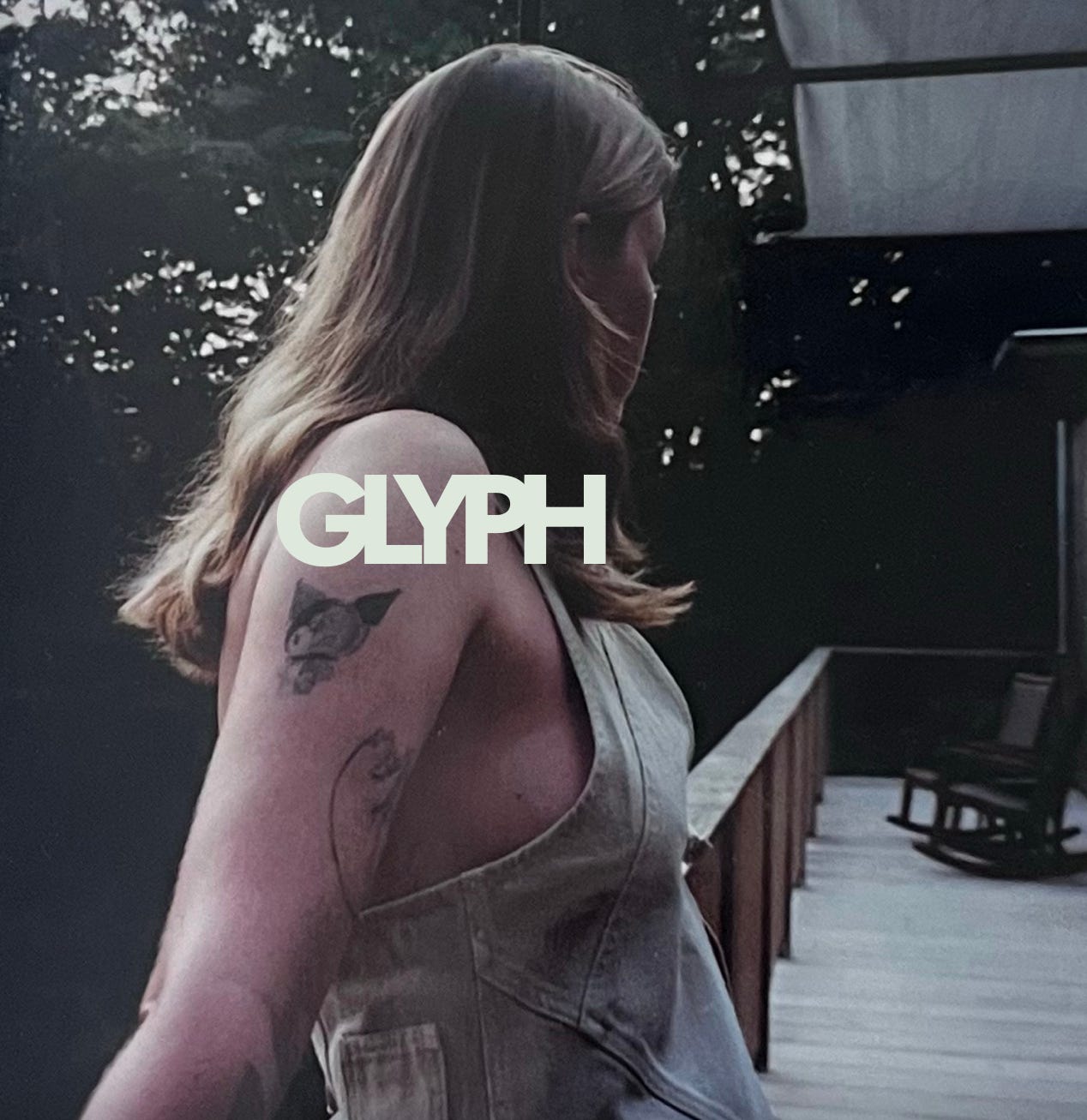
This is the context in which my friend Isabel and I have been creating Glyph, a platform and directory connecting NYC tattoo artists and clients. You can build software just for fun - software that’s also social, people-oriented, and something you want to see in the world that doesn’t yet exist.
We noticed two things:
The tattoo community, comprised of artists and clients, is its own niche, particularly in NYC. Tattooing in New York is its own microworld, not because everyone in it is the same, but because it has its own ‘grammar’. Artists, collectors, studios, flash days, guest spots, private books, waitlists, referrals, etc. all form a social map.
The tattoo world is already online, but it is online in ways that flatten it. Existing software either treats tattooing like a generic consumer marketplace or forces artists and clients through social platforms that were never built for this kind of discovery.
The first failure is impersonal software: platforms that try to make booking a tattoo behave like booking a blowout or finding a dog walker. Tattooing is not a clean matching problem; the goal is not merely to “find a provider.” It is to find the right person whose work, taste, pace, and sensibility you trust enough to put on your body permanently.
The second failure mode is Instagram, which is both indispensable and terrible. Clients scroll endlessly, following tags, saved posts, studio accounts, friend-of-friend recommendations, and half-remembered handles. Artists, meanwhile, are chained to a platform many of them actively dislike because it remains the closest thing they have to a portfolio, discovery engine, booking funnel, and public proof of life. They are not just artists; they are content strategists, video editors, ad buyers, and reluctant participants in whatever format the algorithm is rewarding that month.
The result is a strange asymmetry: there is more tattoo imagery available than ever, and yet finding the right artist is still opaque. Clients have infinite content but little orientation. Artists have visibility, but only on terms set by a platform that does not care about (or is even aware of ) tattooing as a culture.
Glyph is our attempt to make the tattoo internet feel less like a feed and more like a map. To explain more in product terms, it marries features of Instagram, ZocDoc, Behance, and Pinterest to create a small/manual/local/human platform for the tattoo community.
5.Fragments + Close
There will not be one winner here, because the point is not to build the next everything app. The point is fragmentation.
More Glyph-like products will emerge: small pieces of software built around specific scenes, obsessions, and geographies. Some of this already exists. Are.na is not trying to be Pinterest; it is a slower, stranger tool for collecting references and building worlds. Letterboxd is not “content about movies”; it is a social graph of taste. silk.cx describes itself as a blogging platform for creative research, moodboarding, and subculture. Lore is organizing fandom rabbit holes that have been scattered across hostile forums, outdated wikis, and dozens of tabs. There’s also Catchr, the app for fishing enthusiasts to log and share their catches.
Disclaimer: These products are not trying to be or replace Reddit or Discord. Reddit and Discord are useful and provide an odd sense of community, sometimes, to some people… but they are also chaotic, pseudo-anonymous, almost violent and still organized around engagement: karma, upvotes. Personal Software is personal, intentional, slower, and built on trust.
A key tenet of postmodernism is “the fragmented self”: there’s no one true you, you’re by nature de-centered: individuals are composed of multiple, contradictory identities that ebb and flow based on context, culture, and media influence. The internet will reflect that - fragmentation will be the point.